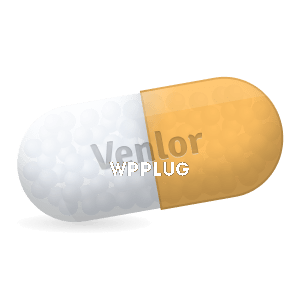
| Product dosage: 75mg | |||
|---|---|---|---|
| Package (num) | Per pill | Price | Buy |
| 60 | $0.95 | $56.76 (0%) | 🛒 Add to cart |
| 90 | $0.89 | $85.14 $79.98 (6%) | 🛒 Add to cart |
| 120 | $0.86 | $113.52 $103.20 (9%) | 🛒 Add to cart |
| 180 | $0.84 | $170.28 $150.50 (12%) | 🛒 Add to cart |
| 270 | $0.82 | $255.42 $221.02 (13%) | 🛒 Add to cart |
| 360 | $0.81
Best per pill | $340.56 $290.68 (15%) | 🛒 Add to cart |
Synonyms | |||
Venlor: Expert Treatment for Depression and Anxiety Disorders
Venlor (venlafaxine hydrochloride) is a prescription antidepressant medication belonging to the serotonin-norepinephrine reuptake inhibitor (SNRI) class. It is clinically indicated for the management of major depressive disorder (MDD), generalized anxiety disorder (GAD), social anxiety disorder (SAD), and panic disorder (PD) in adults. This medication works by increasing the levels of serotonin and norepinephrine, two crucial neurotransmitters in the brain that play a vital role in mood regulation, emotional stability, and the stress response. By restoring the balance of these chemicals, Venlor helps alleviate the core symptoms of depression and anxiety, enabling patients to regain functional capacity and improve their overall quality of life. Treatment should be initiated and monitored by a qualified healthcare professional.
Features
- Active ingredient: Venlafaxine hydrochloride
- Available in extended-release (XR) capsules and immediate-release (IR) tablets
- Standard strengths: 37.5 mg, 75 mg, 150 mg (XR); 25 mg, 37.5 mg, 50 mg, 75 mg, 100 mg (IR)
- Mechanism of action: Potent serotonin and norepinephrine reuptake inhibition
- Prescription-only medication requiring medical supervision
- Manufactured under strict pharmaceutical quality control standards
Benefits
- Effectively reduces the core symptoms of major depressive disorder, including low mood, anhedonia, and fatigue.
- Provides significant relief from excessive worry, nervousness, and physical symptoms associated with generalized anxiety disorder.
- Helps decrease the frequency and intensity of panic attacks in patients diagnosed with panic disorder.
- Improves social engagement and reduces avoidance behaviors in social anxiety disorder.
- Contributes to the restoration of normal sleep patterns, appetite, and energy levels.
- Supports long-term mood stability and functional improvement when used as part of a comprehensive treatment plan.
Common use
Venlor is primarily prescribed for the treatment of major depressive disorder (MDD) in adults. It is also approved for the management of generalized anxiety disorder (GAD), social anxiety disorder (social phobia), and panic disorder, with or without agoraphobia. The extended-release formulation (Venlor XR) is commonly preferred for its once-daily dosing, which improves adherence and provides steady-state plasma concentrations, thereby minimizing peak-to-trough fluctuations and potential side effects. Off-label uses may include the management of certain neuropathic pain conditions, migraine prophylaxis, and hot flashes associated with menopause, though these applications require careful clinical evaluation and are not FDA-approved indications.
Dosage and direction
Dosage must be individualized based on the patient’s condition, treatment response, and tolerability. For major depressive disorder and generalized anxiety disorder, the recommended starting dose for Venlor XR is 75 mg once daily, taken with food at approximately the same time each day. Depending on clinical response, the dose may be increased in increments of 75 mg at intervals of no less than 4 days, up to a maximum of 225 mg per day. For panic disorder, a lower starting dose of 37.5 mg once daily for 7 days is recommended before increasing to 75 mg daily. The immediate-release formulation is usually administered in two or three divided doses daily. Dosage adjustments are necessary in patients with hepatic or renal impairment. Abrupt discontinuation should be avoided; gradual tapering is recommended under medical supervision.
Precautions
Patients should be closely monitored for clinical worsening, suicidality, or unusual changes in behavior, especially during the initial few months of therapy or following dosage changes. Venlor may increase the risk of bleeding; caution is advised in patients taking anticoagulants or with underlying bleeding disorders. Use with caution in patients with a history of mania/hypomania, seizures, or angle-closure glaucoma. Blood pressure should be monitored regularly due to the potential for dose-dependent hypertension. Venlor may affect glycemic control in patients with diabetes. Patients should be advised about the potential for impaired judgment, thinking, or motor skills and cautioned about operating hazardous machinery or driving until they know how the medication affects them.
Contraindications
Venlor is contraindicated in patients with known hypersensitivity to venlafaxine or any excipient in the formulation. It must not be used concomitantly with monoamine oxidase inhibitors (MAOIs) or within 14 days of discontinuing MAOI therapy due to the risk of serotonin syndrome. Avoid use in patients with uncontrolled narrow-angle glaucoma. Venlor is contraindicated in individuals with severe hepatic impairment or end-stage renal disease requiring dialysis.
Possible side effect
Common adverse reactions include nausea, headache, drowsiness, dry mouth, dizziness, insomnia, constipation, sweating, and nervousness. Many of these are dose-dependent and may diminish over time. Less frequently, patients may experience increased blood pressure, palpitations, blurred vision, weight changes, sexual dysfunction, or abnormal dreams. Serious but rare side effects include serotonin syndrome, hyponatremia (especially in elderly patients), seizures, manic episodes, angle-closure glaucoma, and abnormal bleeding. Any unusual or severe symptoms should be reported to a healthcare provider immediately.
Drug interaction
Venlor has significant interaction potential. Concomitant use with MAOIs is contraindicated. Serotonin syndrome risk is increased with other serotonergic drugs (e.g., SSRIs, SNRIs, triptans, tramadol, lithium, St. John’s Wort). Venlor is a moderate inhibitor of CYP2D6 and may increase levels of drugs metabolized by this enzyme (e.g., tricyclic antidepressants, antipsychotics, beta-blockers). Drugs that interfere with serotonin reuptake (e.g., cocaine, amphetamines) may enhance toxicity. Caution is advised with NSAIDs, aspirin, or warfarin due to increased bleeding risk. Venlor may interact with linezolid, intravenous methylene blue, and diuretics. A comprehensive medication review is essential before initiation.
Missed dose
If a dose is missed, it should be taken as soon as remembered unless it is close to the time of the next scheduled dose. In that case, the missed dose should be skipped, and the regular dosing schedule resumed. Doubling the dose to make up for a missed one is not recommended. Patients should contact their healthcare provider or pharmacist if unsure about how to manage a missed dose, especially if consistent dosing is important for symptom control.
Overdose
Symptoms of Venlor overdose may include dizziness, drowsiness, tachycardia, changes in blood pressure, serotonin syndrome, seizures, or coma. In case of suspected overdose, immediate medical attention is required. Treatment is supportive and symptomatic; there is no specific antidote. Activated charcoal may be administered if ingestion was recent. ECG monitoring is advised due to the risk of QT prolongation. Dialysis is not expected to be effective due to Venlor’s high volume of distribution.
Storage
Store at room temperature (20°–25°C or 68°–77°F), with excursions permitted between 15°–30°C (59°–86°F). Keep the medication in its original container, tightly closed, and protected from light and moisture. Do not store in bathrooms or damp areas. Keep out of reach of children and pets. Dispose of unused or expired medication through a medicine take-back program or according to FDA guidelines.
Disclaimer
This information is intended for educational purposes only and does not replace professional medical advice, diagnosis, or treatment. Always consult a qualified healthcare provider before starting, changing, or discontinuing any medication. Do not disregard professional medical advice or delay seeking it based on information provided here. Individual patient responses to Venlor may vary.
Reviews
Clinical studies and patient reports indicate that Venlor is effective in reducing symptoms of depression and anxiety, with many users noting improved mood and functionality within several weeks. Some patients report side effects such as initial nausea or sleep disturbances, which often subside with continued use. Adherence to prescribed dosing and regular follow-up with a healthcare provider are associated with better outcomes. Long-term users often describe sustained symptom relief and improved quality of life. As with all antidepressants, individual experiences vary, and a personalized treatment approach is essential.