Toradol: Potent Non-Opioid Pain Relief for Acute Conditions
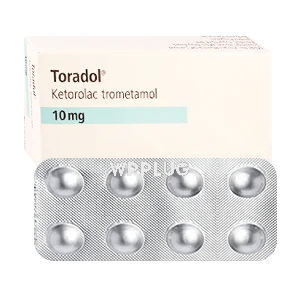
Toradol (ketorolac tromethamine) is a nonsteroidal anti-inflammatory drug (NSAID) indicated for the short-term management of moderately severe acute pain. It represents a critical tool in the medical arsenal, offering potent analgesia comparable to certain opioids but without the associated risks of respiratory depression or addiction. Its mechanism of action involves the potent inhibition of prostaglandin synthesis via cyclooxygenase (COX) enzyme inhibition, effectively reducing inflammation and pain at the source. This makes it a valuable option in clinical settings where controlling significant pain while minimizing opioid exposure is a priority.
Features
- Active pharmaceutical ingredient: Ketorolac tromethamine.
- Available in oral tablet (10 mg) and injectable (15 mg/mL, 30 mg/mL) formulations.
- Classified as a nonsteroidal anti-inflammatory drug (NSAID) with potent analgesic and anti-inflammatory properties.
- Onset of action for IV/IM administration is approximately 30 minutes, with peak effect within 2-3 hours.
- Demonstrated analgesic efficacy comparable to morphine 12 mg IM or meperidine 100 mg IM in postoperative pain studies.
- Not subject to the same controlled substance regulations as opioid analgesics.
Benefits
- Provides powerful, non-opioid pain relief, effectively managing acute moderate to severe pain.
- Reduces the need for opioid medications, thereby decreasing the risk of opioid-related side effects like sedation, constipation, and respiratory depression.
- Minimizes the potential for dependence and addiction associated with long-term or high-dose opioid therapy.
- Offers both parenteral and oral administration routes, allowing for flexible use in inpatient and outpatient settings.
- Acts on the inflammatory pathway, addressing the underlying cause of pain in many acute musculoskeletal and postoperative scenarios.
Common use
Toradol is exclusively indicated for the short-term management of acute, moderately severe pain. Its use is typically limited to a maximum of 5 days due to the increasing risk of serious adverse events with prolonged administration. Common clinical applications include the management of postoperative pain following surgical procedures, particularly in orthopedic, abdominal, and gynecological surgeries. It is also employed for pain associated with acute musculoskeletal conditions, such as flares of gout, acute bursitis, tendonitis, and renal colic. It is not intended for minor or chronic pain conditions like arthritis or low back pain.
Dosage and direction
Dosing is highly dependent on the patient’s age, renal function, and route of administration. It is critical to use the lowest effective dose for the shortest duration possible.
- Adults (under 65, normal renal function):
- Single-Dose Treatment (IM/IV): 60 mg as a single dose, or 30 mg every 6 hours. Maximum daily dose: 120 mg.
- Multiple-Dose Treatment (IM/IV): 30 mg every 6 hours. Maximum daily dose: 120 mg.
- Oral (as continuation from parenteral therapy): 20 mg for the first oral dose, then 10 mg every 4 to 6 hours. Maximum daily oral dose: 40 mg.
- Adults (65 and older, or with renal impairment):
- Reduced dosing is mandatory. A typical dose is 15 mg (IM/IV) every 6 hours. Maximum daily dose: 60 mg.
- The total combined duration of parenteral and oral therapy must not exceed 5 days.
Precautions
Toradol carries a significant risk of serious adverse effects and requires careful patient selection and monitoring.
- GI Risk: Can cause serious GI adverse events including bleeding, ulceration, and perforation, which can be fatal. These events can occur at any time during use and without warning symptoms. Use with extreme caution in patients with a history of ulcer disease or GI bleeding.
- Renal Risk: May cause renal papillary necrosis and other renal injury. Risk is increased in patients with impaired renal function, heart failure, liver dysfunction, those taking diuretics or ACE inhibitors, and the elderly. Renal function should be monitored in at-risk patients.
- Cardiovascular Risk: NSAIDs may increase the risk of serious and sometimes fatal cardiovascular thrombotic events, myocardial infarction, and stroke. The risk may increase with duration of use. Contraindicated for the treatment of peri-operative pain in coronary artery bypass graft (CABG) surgery.
- Hematologic Risk: Can inhibit platelet aggregation and prolong bleeding time. Use with caution in patients with coagulation disorders or those on anticoagulant therapy.
Contraindications
Toradol is contraindicated in patients with:
- Known hypersensitivity to ketorolac, aspirin, or other NSAIDs (e.g., history of asthma, urticaria, or other allergic-type reactions after taking these drugs).
- Active peptic ulcer disease, recent gastrointestinal bleeding or perforation, or a history of peptic ulcer disease or GI bleeding.
- A history of asthma, urticaria, or other allergic-type reactions after taking aspirin or other NSAIDs.
- Advanced renal impairment or patients at risk for renal failure due to volume depletion.
- As a prophylactic analgesic before any major surgery.
- For the treatment of peri-operative pain in the setting of coronary artery bypass graft (CABG) surgery.
- In labor and delivery, and in nursing mothers.
- Concomitant use with other NSAIDs, including aspirin and probenecid.
- In patients with suspected or confirmed cerebrovascular bleeding, hemorrhagic diathesis, incomplete hemostasis, or those at high risk of bleeding.
Possible side effect
Common side effects (≥2%) include:
- Gastrointestinal: Nausea, dyspepsia, gastrointestinal pain, constipation, diarrhea, flatulence, vomiting.
- Central Nervous System: Headache, dizziness, drowsiness.
- Other: Edema, sweating, injection site pain (with IM formulation).
Serious side effects requiring immediate medical attention include:
- GI ulceration, bleeding, or perforation.
- Hepatotoxicity (elevated liver enzymes, jaundice).
- Renal impairment, acute renal failure.
- Hypertension, heart failure.
- Stevens-Johnson Syndrome, toxic epidermal necrolysis.
- Anaphylactoid reactions.
Drug interaction
Toradol has numerous significant drug interactions:
- Other NSAIDs (including aspirin): Concomitant use increases risk of GI toxicity with no therapeutic benefit. Contraindicated.
- Anticoagulants (e.g., warfarin), antiplatelets (e.g., clopidogrel), SSRIs, SNRIs: Increased risk of serious bleeding.
- ACE inhibitors, ARBs, Diuretics: May diminish the antihypertensive effect of these drugs and increase risk of renal impairment.
- Lithium: Toradol can decrease lithium clearance, increasing lithium plasma levels and risk of toxicity.
- Methotrexate: May reduce methotrexate clearance, increasing the risk of methotrexate toxicity.
- Probenecid: Concurrent use is contraindicated as it significantly increases ketorolac plasma levels.
- Pentoxifylline: Increased risk of bleeding.
Missed dose
As Toradol is used on an as-needed basis for acute pain, a “missed dose” protocol is not typically applicable. The medication should be taken only when required for pain relief, adhering to the minimum dosing interval (e.g., every 6 hours for parenteral, every 4-6 hours for oral). Do not double a dose to make up for a missed one.
Overdose
Overdose may manifest as symptoms of NSAID overdose, primarily involving the gastrointestinal, renal, and central nervous systems.
- Symptoms: Nausea, vomiting, epigastric pain, gastrointestinal bleeding, lethargy, drowsiness, acute renal failure, respiratory depression, coma, and rarely, cardiovascular collapse.
- Management: There is no specific antidote. Management is supportive and symptomatic. Emesis and/or activated charcoal (if ingested recently) may be considered. Forced diuresis, alkalinization of the urine, or hemodialysis are not effective due to the high protein binding of ketorolac. Support blood pressure and provide general life-support measures as required.
Storage
- Store at room temperature (20°C to 25°C or 68°F to 77°F), away from light, moisture, and heat.
- Do not freeze.
- Keep all medications out of the reach of children and pets.
- Do not keep outdated medicine or medicine no longer needed. Consult your pharmacist on the proper disposal method.
Disclaimer
This information is for educational and informational purposes only and does not constitute medical advice. It is not a substitute for professional medical advice, diagnosis, or treatment. Always seek the advice of your physician or other qualified health provider with any questions you may have regarding a medical condition or medication. Never disregard professional medical advice or delay in seeking it because of something you have read here. The author and publisher are not responsible for any specific health or allergy needs that may require medical supervision and are not liable for any damages or negative consequences from any treatment, action, application, or preparation, to any person reading or following the information in this document.
Reviews
- “As an anesthesiologist, Toradol is a cornerstone of our multimodal analgesia protocol. Its ability to provide significant opioid-sparing effects in the immediate postoperative period is invaluable, reducing PONV and speeding ambulation.” – Dr. E. Vance, MD
- “In the ER, we use IV Toradol frequently for renal colic and acute musculoskeletal injuries. It’s remarkably effective, often avoiding the need for opioids altogether. The strict 5-day limit is a crucial safety rule we never breach.” – Sarah R., PA-C
- “Following my orthopedic surgery, I was transitioned to oral Toradol. The pain relief was substantial, and I was clear-headed without the ‘fog’ and nausea I experienced with the morphine I was given initially.” – Patient, Knee Arthroplasty
- “While its efficacy is undeniable, the side effect profile demands immense respect. I reserve it for appropriate patients with normal renal function and no GI history, and I always reinforce the strict duration of therapy.” – Dr. A. Gupta, Internal Medicine