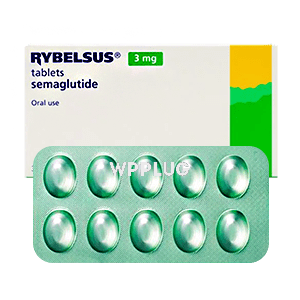
| Product dosage: 14mg | |||
|---|---|---|---|
| Package (num) | Per pill | Price | Buy |
| 10 | $30.96 | $309.60 (0%) | 🛒 Add to cart |
| 20 | $26.66 | $619.20 $533.20 (14%) | 🛒 Add to cart |
| 30 | $25.23
Best per pill | $928.80 $756.80 (19%) | 🛒 Add to cart |
| Product dosage: 3mg | |||
|---|---|---|---|
| Package (num) | Per pill | Price | Buy |
| 10 | $21.50 | $215.00 (0%) | 🛒 Add to cart |
| 20 | $18.06 | $430.00 $361.20 (16%) | 🛒 Add to cart |
| 30 | $15.77
Best per pill | $645.00 $473.00 (27%) | 🛒 Add to cart |
| Product dosage: 7mg | |||
|---|---|---|---|
| Package (num) | Per pill | Price | Buy |
| 10 | $28.38 | $283.80 (0%) | 🛒 Add to cart |
| 20 | $24.08 | $567.60 $481.60 (15%) | 🛒 Add to cart |
| 30 | $22.93
Best per pill | $851.40 $688.00 (19%) | 🛒 Add to cart |
Synonyms | |||
Rybelsus: The First Oral GLP-1 for Effective Type 2 Diabetes Management
Rybelsus (semaglutide) tablets represent a significant advancement in the pharmacological management of type 2 diabetes mellitus (T2DM). As the first and only glucagon-like peptide-1 (GLP-1) receptor agonist available in an oral formulation, it offers the proven efficacy of the GLP-1 drug class with the convenience of a once-daily pill. This medication works by augmenting glucose-dependent insulin secretion, suppressing glucagon secretion, and slowing gastric emptying, thereby addressing multiple pathophysiological defects of T2DM. Its development marks a pivotal shift from injectable GLP-1 therapies, potentially improving adherence and accessibility for a broader patient population seeking robust glycemic control and cardiovascular benefits.
Features
- Active Ingredient: Semaglutide, a glucagon-like peptide-1 (GLP-1) receptor agonist.
- Administration Route: Oral tablet.
- Dosage Strengths: Available in 3 mg, 7 mg, and 14 mg tablets.
- Mechanism of Action: Functions as a GLP-1 analog, stimulating insulin secretion and suppressing glucagon secretion in a glucose-dependent manner.
- Dosing Schedule: Strictly once-daily regimen.
- Administration Protocol: Must be taken on an empty stomach with no more than 4 ounces of plain water, at least 30 minutes before the first food, beverage, or other oral medications of the day.
Benefits
- Superior Glycemic Control: Demonstrates significant reductions in HbA1c, with many patients achieving target glycemic goals.
- Weight Management: A consistent and clinically meaningful reduction in body weight is observed as a beneficial secondary effect.
- Cardiovascular Risk Reduction: Has demonstrated cardiovascular safety and can reduce the risk of major adverse cardiovascular events (MACE) in patients with established cardiovascular disease.
- Convenience of Oral Dosing: Eliminates the need for injections, which may reduce treatment burden and improve long-term adherence.
- Low Risk of Hypoglycemia: Its glucose-dependent mechanism of action carries a low inherent risk of hypoglycemia, particularly when not combined with insulin or sulfonylureas.
- Once-Daily Regimen: Simplifies the treatment schedule, aiding patient compliance.
Common use
Rybelsus is indicated as an adjunct to diet and exercise to improve glycemic control in adults with type 2 diabetes mellitus. It is commonly used in patients for whom metformin alone does not provide adequate glycemic control, either as a second-line agent or in combination with other antihyperglycemic agents like SGLT2 inhibitors or metformin. It is particularly considered for patients who would benefit from a GLP-1 receptor agonist but have a strong preference for or clinical need to avoid an injectable therapy. Its cardiovascular benefits also make it a preferred choice for patients with T2DM and established atherosclerotic cardiovascular disease.
Dosage and direction
The initiation and titration of Rybelsus must follow a strict protocol to optimize tolerability, particularly minimizing gastrointestinal side effects.
- Initiation Dose: The starting dose is 3 mg once daily for 30 days.
- Titration: After 30 days, the dose should be increased to 7 mg once daily.
- Maintenance Dose: If additional glycemic control is needed after at least 30 days on the 7 mg dose, the dose may be increased to 14 mg once daily.
- Administration Instructions:
- Take on an empty stomach immediately upon waking.
- Swallow the tablet whole with no more than 4 ounces (120 mL) of plain water. Do not split, crush, or chew.
- Wait at least 30 minutes before eating, drinking (anything other than a few sips of water), or taking any other oral medications.
- Do not take a missed dose later in the day.
Precautions
- Gastrointestinal Adverse Reactions: Nausea, vomiting, and diarrhea are common, especially during dose escalation. These effects are usually transient. Advise patients on strategies for managing these symptoms.
- Pancreatitis: Patients should be informed of the characteristic symptoms of acute pancreatitis (severe persistent abdominal pain that may radiate to the back, with or without vomiting). If suspected, discontinue Rybelsus and do not restart if pancreatitis is confirmed.
- Diabetic Retinopathy Complications: Rapid improvements in glycemic control have been associated with a temporary worsening of diabetic retinopathy. Patients with a history of diabetic retinopathy should be monitored.
- Acute Kidney Injury: There have been post-marketing reports of acute kidney injury and worsening of chronic renal failure, sometimes requiring hemodialysis, which may be related to gastrointestinal side effects like nausea, vomiting, and diarrhea leading to volume depletion. Ensure adequate hydration.
- Hypersensitivity Reactions: Serious hypersensitivity reactions (e.g., anaphylaxis, angioedema) have been reported. Discontinue Rybelsus if suspected and treat promptly.
- Hypoglycemia: Risk increases when used in conjunction with insulin secretagogues (e.g., sulfonylureas) or insulin. A dose reduction of the secretagogue or insulin may be necessary.
Contraindications
Rybelsus is contraindicated in patients with:
- A personal or family history of medullary thyroid carcinoma (MTC).
- Patients with Multiple Endocrine Neoplasia syndrome type 2 (MEN 2).
- A history of hypersensitivity to semaglutide or any of the product’s excipients.
Possible side effect
The most common adverse reactions (≥5%) are gastrointestinal in nature:
- Very Common (≥10%): Nausea, diarrhea.
- Common (≥1% to <10%): Abdominal pain, constipation, vomiting, dyspepsia, bloating, decreased appetite, hypoglycemia (when used with insulin or a sulfonylurea).
- Uncommon (≥0.1% to <1%): Gastritis, gastroesophageal reflux disease (GERD), eructation (belching), dizziness, fatigue, increased lipase, increased amylase.
- Rare but Serious: Acute pancreatitis, acute kidney injury, hypersensitivity reactions, diabetic retinopathy complications.
Drug interaction
- Other Oral Medications: Because Rybelsus delays gastric emptying, it has the potential to impact the absorption of concomitantly administered oral medications. For medications with a narrow therapeutic index (e.g., levothyroxine, warfarin), consistency in timing of administration is crucial. Administer these medications at least 30 minutes after Rybelsus or with a meal.
- Insulin and Insulin Secretagogues: Concomitant use increases the risk of hypoglycemia. Dose reduction of the insulin or secretagogue should be considered.
- GLP-1 Receptor Agonists: Do not use Rybelsus concomitantly with other GLP-1 receptor agonists.
Missed dose
- If a dose is missed, the patient should skip that dose and take the next daily dose at the regular time the following morning.
- Do not take two doses on the same day to make up for a missed dose.
Overdose
- Overdose would be expected to produce severe nausea, severe vomiting, and potentially severe hypoglycemia if taken with other glucose-lowering medications.
- In the event of overdose, appropriate supportive treatment should be initiated according to the patient’s clinical signs and symptoms. Because semaglutide has a long half-life (approximately one week), these effects may be prolonged, and continued observation is necessary.
Storage
- Store Rybelsus in the original blister card at room temperature (20°C to 25°C or 68°F to 77°F); excursions permitted between 15°C to 30°C (59°F to 86°F).
- Keep the blister cards in the original outer carton to protect from moisture.
- Do not place the blister cards in a pill box or weekly organizer.
Disclaimer
This information is for educational purposes only and is not a substitute for professional medical advice, diagnosis, or treatment. Always seek the advice of your physician or other qualified health provider with any questions you may have regarding a medical condition or before starting any new treatment. Never disregard professional medical advice or delay in seeking it because of something you have read here.
Reviews
- Clinical Trial Data: Large-scale cardiovascular outcome trials (e.g., PIONEER 6) and other phase 3 studies have consistently shown Rybelsus to be effective in significantly lowering HbA1c and body weight, with a safety profile consistent with the GLP-1 class. Its non-inferiority to injectable semaglutide (Ozempic) has been demonstrated.
- Patient Perspectives: Many patients report high satisfaction due to the effectiveness of glycemic control and weight loss combined with the convenience of an oral tablet. The initial gastrointestinal side effects are frequently cited as a challenge during the titration phase but often subside over time.
- Expert Consensus: Endocrinologists and diabetes specialists recognize Rybelsus as a valuable addition to the T2DM treatment arsenal, particularly for injection-averse patients. Its place in therapy is well-established in major clinical guidelines.