
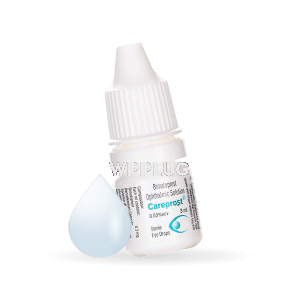
| Product dosage: 0.3mg | |||
|---|---|---|---|
| Package (num) | Per bottle | Price | Buy |
| 1 | $36.12 | $36.12 (0%) | 🛒 Add to cart |
| 2 | $33.54 | $72.24 $67.08 (7%) | 🛒 Add to cart |
| 3 | $32.68 | $108.36 $98.04 (10%) | 🛒 Add to cart |
| 4 | $32.25 | $144.48 $129.00 (11%) | 🛒 Add to cart |
| 5 | $31.99 | $180.60 $159.96 (11%) | 🛒 Add to cart |
| 6 | $31.82 | $216.72 $190.92 (12%) | 🛒 Add to cart |
| 7 | $31.82 | $252.84 $222.74 (12%) | 🛒 Add to cart |
| 8 | $31.71 | $288.96 $253.70 (12%) | 🛒 Add to cart |
| 9 | $31.63 | $325.08 $284.66 (12%) | 🛒 Add to cart |
| 10 | $31.56
Best per bottle | $361.20 $315.62 (13%) | 🛒 Add to cart |
Synonyms | |||
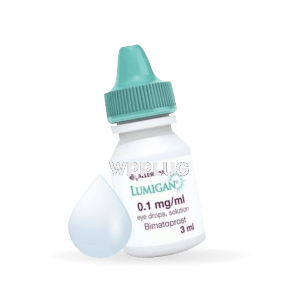
Careprost: Enhance Eyelash Growth with Bimatoprost Therapy
Careprost is a topical ophthalmic solution containing the active pharmaceutical ingredient bimatoprost, a synthetic prostaglandin analogue. It is clinically formulated and FDA-approved for the treatment of hypotrichosis of the eyelashes, promoting growth by increasing the percentage of hairs in the anagen (active growth) phase and extending the duration of this phase. This prescription medication offers a scientifically-backed, non-invasive approach to achieving longer, thicker, and darker eyelashes, addressing a common cosmetic concern with a well-researched therapeutic agent. Proper application and medical supervision are paramount for achieving optimal results while minimizing potential risks.
Features
- Active Ingredient: Bimatoprost 0.03% (0.3 mg/mL)
- Formulation: Sterile, isotonic, buffered ophthalmic solution
- Presentation: Supplied in a 3 mL plastic dropper bottle
- Preservative: Contains benzalkonium chloride
- Mechanism of Action: Prostaglandin analogue/prostamide receptor agonist
Benefits
- Clinically proven to significantly increase eyelash length, thickness, and darkness.
- Transforms sparse or inadequate eyelashes into a more prominent and defined appearance.
- Offers a non-surgical, non-invasive alternative to eyelash extensions or serums with unproven efficacy.
- Results are gradual and natural-looking, typically observed after several weeks of consistent use.
- The treatment effect is sustained with continued application as per the prescribed regimen.
- Provides a targeted therapeutic approach for a defined cosmetic indication.
Common use
Careprost is indicated for the treatment of hypotrichosis (inadequate or not enough eyelashes). It is prescribed for individuals seeking to enhance the growth of their natural upper eyelashes. It is not intended for use on the lower eyelid. Treatment is typically long-term, and results are not permanent; discontinuation of use will lead to a gradual return of eyelashes to their pre-treatment appearance over several weeks to months.
Dosage and direction
The recommended dosage is one application per day, in the evening, to the skin of the upper eyelid margin at the base of the eyelashes using the supplied sterile applicator. Step-by-step instructions:
- Ensure your face is clean, makeup is removed, and contact lenses are out.
- Remove one applicator from its tray.
- Holding the bottle upright, carefully place one drop of the solution onto the applicator.
- Immediately draw the applicator carefully across the skin of the upper eyelid margin at the base of the eyelashes, starting from the inner part to the outer part. Do not apply directly to the eyeball.
- Blot any excess solution beyond the eyelid margin with a tissue.
- Dispose of the applicator after a single use; do not reuse.
- Repeat the process for the opposite eyelid using a new, sterile applicator.
- Recap the bottle tightly after use.
Precautions
- For topical ophthalmic use on the skin of the eyelid margin only. Not for intraocular use.
- Contains benzalkonium chloride, which may be absorbed by soft contact lenses. Remove contact lenses prior to application and wait at least 15 minutes before reinsertion.
- Avoid allowing the tip of the bottle or the applicator to contact any surface, including the eye, fingers, or surrounding structures, to prevent contamination.
- If more than one topical ophthalmic medication is being used, administer them at least 5 minutes apart.
- May cause gradual darkening of the eyelid skin and iris (the colored part of the eye), which may be permanent. Iris pigmentation changes are more likely in patients with mixed-color irides (e.g., green-brown, blue-brown, yellow-brown).
- May cause increased brown pigmentation of the periocular skin.
- Not for use in pediatric patients.
Contraindications
Careprost is contraindicated in patients with:
- Known hypersensitivity to bimatoprost, benzalkonium chloride, or any other component of the formulation.
- Active or suspected ocular or periocular infections (e.g., conjunctivitis, keratitis, blepharitis).
Possible side effect
The most frequently reported side effects are generally ocular and localized to the application site. These include:
- Common (≥ 1-10%): Conjunctival hyperemia (eye redness), pruritus (itching of the eyes), skin hyperpigmentation at the application site, ocular dryness, and eye irritation.
- Less Common (≤ 1%): Blepharitis, cataract, visual disturbance, conjunctival edema, photophobia, lacrimation increased, asthenopia, eye pain, and headache.
- Rare: Iris pigmentation changes (increased brown pigmentation), eyelash darkening, periorbital edema, iritis, uveitis, macular edema (including cystoid macular edema), and eyelid retraction.
Drug interaction
Formal drug interaction studies have not been conducted with Careprost. However, the potential for interactions with other topical ophthalmic agents exists. Concurrent use of multiple prostaglandin analogues or prostamide analogues is not recommended. Inform your healthcare provider of all medications you are using, including prescription, over-the-counter, and other topical products.
Missed dose
If a dose is missed, apply it as soon as you remember on the same day. If it is nearly time for the next scheduled dose, skip the missed dose and resume the usual dosing schedule the following evening. Do not apply a double dose to make up for a missed one.
Overdose
Topical overdose is unlikely to produce severe systemic effects due to minimal absorption. If the solution is accidentally ingested, symptomatic and supportive care is recommended. Ocular overdose (e.g., application of multiple drops into the eye) may result in pronounced ocular irritation, conjunctival hyperemia, or a feeling of having something in the eye. The eye should be flushed with lukewarm water. Medical attention should be sought if irritation persists.
Storage
- Store unopened bottles in a refrigerator at 2°C to 8°C (36°F to 46°F).
- Once opened, the bottle may be stored at room temperature up to 25°C (77°F) for 6 weeks.
- Keep the bottle tightly closed in its original carton to protect from light.
- Do not freeze.
- Keep out of the reach and sight of children and pets.
Disclaimer
This information is for educational purposes only and does not constitute medical advice. Careprost is a prescription medication and should only be used under the direct supervision of a qualified healthcare professional. Do not initiate, discontinue, or change the dosage of this medication without consulting your doctor. The full official prescribing information should be consulted for complete details on usage, warnings, and adverse reactions.
Reviews
“After 12 weeks of consistent nightly application as directed by my ophthalmologist, the results are remarkable. My eyelashes are significantly longer and fuller. The process requires patience and meticulous hygiene to avoid irritation, but the clinical outcome is worth it for someone with naturally sparse lashes.” – Verified Patient
“Prescribed for post-chemotherapy lash loss. Noticed the first signs of new growth at about week 5. By month 4, my lashes were not only back but actually better than before treatment. It’s a potent medication, not a cosmetic, and must be respected as such. Minor initial redness subsided after the first week.” – Verified Patient
“As a dermatologist, I prescribe bimatoprost for carefully selected patients. The efficacy is well-documented in clinical literature. The key to success and safety is proper patient education on sterile application technique and managing expectations regarding the timeline for results and potential side effects like periocular skin darkening.” – Healthcare Professional