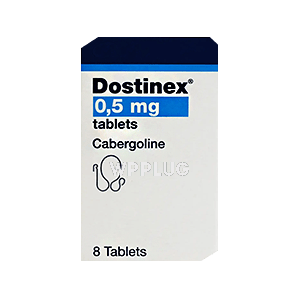
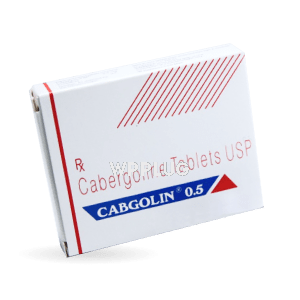
| Product dosage: 0.5mg | |||
|---|---|---|---|
| Package (num) | Per pill | Price | Buy |
| 30 | $3.84 | $115.24 (0%) | 🛒 Add to cart |
| 60 | $3.51 | $230.48 $210.70 (9%) | 🛒 Add to cart |
| 90 | $3.40
Best per pill | $345.72 $306.16 (11%) | 🛒 Add to cart |
Similar products
Cabgolin: Advanced Dopamine Agonist for Hyperprolactinemia Management
Cabgolin (cabergoline) is a potent, long-acting dopamine receptor agonist specifically indicated for the treatment of hyperprolactinemic disorders. It offers a sophisticated therapeutic approach by directly inhibiting prolactin secretion from the anterior pituitary gland. With its high affinity for D2 dopamine receptors and extended half-life, Cabgolin provides sustained biochemical control, tumor volume reduction, and restoration of gonadal function. Its selective mechanism and favorable pharmacokinetic profile make it a cornerstone in endocrinological practice for managing prolactinomas and associated symptomatology.
Features
- Active ingredient: Cabergoline 0.5mg tablets
- Mechanism: Selective dopamine D2 receptor agonist with high pituitary specificity
- Pharmacokinetics: Extended half-life (63-69 hours) allowing twice-weekly dosing
- Bioavailability: Approximately 40-50% following oral administration
- Protein binding: 40-42% primarily to albumin
- Metabolism: Extensive hepatic metabolism via CYP3A4 with minimal renal excretion
- Formulation: Scored tablets for precise dosage titration
Benefits
- Rapid normalization of elevated prolactin levels within 2-3 weeks of initiation
- Significant reduction in pituitary adenoma size with long-term therapy
- Restoration of ovulation and fertility in female patients with hyperprolactinemia
- Improvement in hypogonadal symptoms including libido and sexual function
- Lower recurrence rates compared to other dopamine agonists upon discontinuation
- Convenient twice-weekly dosing regimen enhancing treatment adherence
Common use
Cabgolin is primarily indicated for the treatment of idiopathic or pituitary adenoma-induced hyperprolactinemia. It is extensively used in managing prolactin-secreting adenomas (prolactinomas) of various sizes, including macroprolactinomas where surgical intervention is contraindicated or unsuccessful. The medication is particularly valuable in restoring menstrual regularity and fertility in women with hyperprolactinemic amenorrhea or galactorrhea. In male patients, it effectively addresses hypogonadism, infertility, and galactorrhea associated with elevated prolactin levels. Off-label applications include Parkinson’s disease therapy and suppression of physiological lactation, though these uses require careful risk-benefit assessment.
Dosage and direction
Initiate therapy at 0.25 mg twice weekly, typically administered on Monday and Thursday. Dosage may be increased gradually by 0.25 mg per week at monthly intervals based on prolactin level monitoring. The therapeutic dosage range is 0.5-2.0 mg per week, though some patients with resistant prolactinomas may require up to 4.5 mg weekly. Administer tablets orally with food to minimize gastrointestinal discomfort. Regular assessment of prolactin levels should guide dosage adjustments, with most patients achieving normalization at 1.0 mg weekly. For macroprolactinomas, initiate with 0.25 mg weekly and increase gradually while monitoring tumor size and visual fields.
Precautions
Monitor cardiac function through echocardiography before initiation and periodically during treatment, particularly at doses exceeding 3 mg weekly. Assess baseline liver function tests and prolactin levels before therapy initiation. Use caution in patients with hepatic impairment due to extensive hepatic metabolism. Monitor for signs of impulse control disorders including pathological gambling, hypersexuality, or compulsive behaviors. Exercise particular caution in elderly patients who may be more susceptible to orthostatic hypotension and confusion. Regular ophthalmological examinations are recommended for patients on long-term therapy to detect potential retinal changes.
Contraindications
Hypersensitivity to cabergoline, ergot derivatives, or any component of the formulation. History of cardiac valvular disorders as evidenced by echocardiography demonstrating valvular regurgitation, thickening, or restriction. Uncontrolled hypertension or history of coronary artery disease. Concurrent use with medications that may cause hypotension. Pregnancy unless clearly indicated and monitored by specialists. History of fibrotic disorders including pulmonary, pericardial, or retroperitoneal fibrosis. Severe hepatic impairment where metabolic clearance may be significantly compromised.
Possible side effect
- Nausea (25-30% of patients), typically diminishing with continued therapy
- Headache (15-20%), often transient and dose-related
- Dizziness or orthostatic hypotension (10-15%), particularly during dose titration
- Constipation (8-12%) and dyspepsia (5-8%)
- Fatigue and asthenia (10-15%) during initial treatment phases
- Nasal congestion (5-10%) due to α-adrenergic blockade
- impulse control disorders (2-5%) including pathological gambling or hypersexuality
- Cardiac valvulopathy with long-term high-dose therapy (>3mg weekly)
- Rare cases of pulmonary fibrosis or pleural effusion
Drug interaction
Strong CYP3A4 inhibitors (ketoconazole, ritonavir, clarithromycin) may significantly increase cabergoline concentrations requiring dose reduction. Antipsychotics (haloperidol, phenothiazines) and metoclopramide may antagonize prolactin-lowering effects. Concurrent use with antihypertensive agents may potentiate hypotensive effects. Ergot alkaloids should not be co-administered due to additive ergotism risk. Macrolide antibiotics and protease inhibitors may alter metabolism through CYP3A4 inhibition. Serotonergic agents may increase risk of serotonin syndrome when used concomitantly.
Missed dose
If a dose is missed, administer as soon as remembered unless it is nearly time for the next scheduled dose. Do not double the dose to make up for missed administration. Maintain the regular twice-weekly schedule without interruption. For patients who frequently miss doses, consider simplified dosing regimens or additional adherence support. Document missed doses and assess prolactin levels if multiple doses are missed, as rapid rebound hyperprolactinemia may occur.
Overdose
Symptoms may include severe nausea, vomiting, hypotension, confusion, hallucinations, and psychosis. Management involves immediate gastric lavage if ingestion occurred within 2 hours followed by activated charcoal administration. Provide supportive care including intravenous fluids for hypotension and antiemetics for nausea. Severe hypertension may require nitroprusside or phentolamine administration. Monitor cardiac function and vital signs continuously. Hemodialysis is not effective due to high protein binding. Consider echocardiography to assess cardiac valve function following significant overdose.
Storage
Store at controlled room temperature (20-25°C or 68-77°F) in the original container protected from light and moisture. Keep tablets in blister packs until administration to maintain stability. Do not store in bathroom or damp areas. Keep out of reach of children and pets. Do not use beyond the expiration date printed on packaging. Discard any tablets showing signs of discoloration or physical degradation.
Disclaimer
This information is for educational purposes only and does not constitute medical advice. Treatment decisions must be made by qualified healthcare professionals based on individual patient characteristics. Always follow prescribing information and clinical guidelines. Dosage adjustments should be based on regular monitoring of prolactin levels and clinical response. Report any adverse effects to healthcare providers promptly. This medication requires prescription and professional supervision throughout treatment duration.
Reviews
Clinical studies demonstrate 80-90% normalization of prolactin levels within 12 weeks of therapy initiation. Long-term data shows sustained efficacy in 70-85% of patients with microprolactinomas at 5-year follow-up. Macroprolactinoma patients exhibit 60-70% tumor volume reduction with 2 years of continuous therapy. Patient-reported outcomes indicate significant improvement in quality of life measures particularly regarding sexual function and psychological well-being. Comparative studies show superior tolerability profile compared to bromocriptine with lower discontinuation rates. Post-marketing surveillance confirms the established safety profile when used within recommended dosing guidelines.