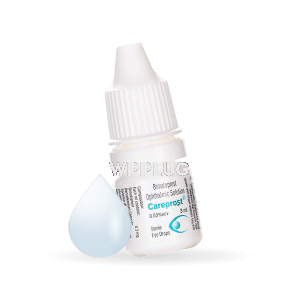

| Product dosage: 0.3mg | |||
|---|---|---|---|
| Package (num) | Per bottle | Price | Buy |
| 1 | $51.60 | $51.60 (0%) | 🛒 Add to cart |
| 2 | $43.00 | $103.20 $86.00 (17%) | 🛒 Add to cart |
| 3 | $37.27 | $154.80 $111.80 (28%) | 🛒 Add to cart |
| 4 | $36.55 | $206.40 $146.20 (29%) | 🛒 Add to cart |
| 5 | $34.40 | $258.00 $172.00 (33%) | 🛒 Add to cart |
| 6 | $32.97 | $309.60 $197.80 (36%) | 🛒 Add to cart |
| 7 | $31.94 | $361.20 $223.60 (38%) | 🛒 Add to cart |
| 8 | $31.18 | $412.80 $249.40 (40%) | 🛒 Add to cart |
| 9 | $29.62 | $464.40 $266.60 (43%) | 🛒 Add to cart |
| 10 | $28.38
Best per bottle | $516.00 $283.80 (45%) | 🛒 Add to cart |
Synonyms | |||
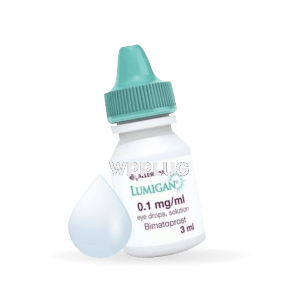
Bimat: Advanced Prostaglandin Therapy for Effective Glaucoma Management
Bimat is a prescription ophthalmic solution indicated for the reduction of elevated intraocular pressure (IOP) in patients with open-angle glaucoma or ocular hypertension. As a synthetic prostamide analog, it functions as a potent ocular hypotensive agent, working through a dual mechanism to enhance uveoscleral outflow and moderately increase trabecular outflow facility. Its formulation is designed for optimal corneal penetration and sustained efficacy, making it a cornerstone in the long-term management of progressive optic neuropathy. This product card provides a comprehensive, expert-level overview for healthcare professionals to ensure informed clinical application and patient counseling.
Features
- Active Pharmaceutical Ingredient: Bimatoprost 0.01% or 0.03% (w/v)
- Pharmacologic Class: Synthetic prostamide analog
- Formulation: Sterile, isotonic, buffered, preserved ophthalmic solution
- pH: Approximately 7.2; osmolarity: ~260 mOsm/kg
- Preservative: Benzalkonium chloride 0.05 mg/mL
- Primary Mechanism: Agonism at the prostaglandin FP receptor, enhancing aqueous humor outflow
- Packaging: 2.5 mL or 5 mL low-density polyethylene (LDPE) bottle with a controlled dropper tip
Benefits
- Provides significant and sustained reduction of intraocular pressure, the primary modifiable risk factor in glaucoma progression.
- Offers a convenient once-daily dosing regimen, enhancing long-term patient adherence and treatment consistency.
- Demonstrates efficacy as both monotherapy and in combination with other IOP-lowering agents, allowing for flexible treatment strategies.
- Its unique prostamide pharmacology may provide an effective option for patients suboptimally responsive to other prostaglandin analogs.
- Helps to preserve visual field and retinal nerve fiber layer integrity by effectively controlling IOP over the long term.
- May induce cosmetic changes in some patients, including increased eyelash growth, length, and darkness, which can be a perceived secondary benefit.
Common use
Bimat is primarily prescribed for the chronic management of open-angle glaucoma (OAG) and ocular hypertension (OHT). Its use is central to a treatment strategy aimed at lowering intraocular pressure to a target level individualized for each patient, based on factors such as baseline IOP, degree of optic nerve damage, and rate of disease progression. It is considered a first-line therapeutic option by many ophthalmological guidelines due to its potent efficacy and favorable systemic safety profile. It may also be used off-label in other secondary glaucomas where increased outflow facility is desired, though such use should be based on specialist judgment.
Dosage and direction
The recommended dosage is one drop in the affected eye(s) once daily, administered in the evening. Optimal efficacy is achieved with consistent daily use. To administer: Wash hands thoroughly. Tilt the head back and pull the lower eyelid down to form a pouch. Hold the dropper directly over the eye and instill one drop. Close the eye gently and apply light pressure to the nasolacrimal duct (tear duct) at the corner of the eye for 1-2 minutes. This minimizes systemic absorption and potential side effects. If more than one topical ophthalmic medication is being used, they should be administered at least 5 minutes apart. The bottle tip must not touch the eyelid, eyelashes, or any other surface to avoid contamination.
Precautions
- Patients should be informed that Bimat may gradually increase brown pigmentation of the iris in the treated eye. This change is likely to be permanent.
- May cause increased eyelash growth, darkening of eyelid skin, and deepening of the eyelid sulcus. These changes are also potentially permanent.
- Can cause macular edema, including cystoid macular edema, particularly in aphakic patients, pseudophakic patients with a torn posterior lens capsule, or in patients with known risk factors for macular edema.
- Contains benzalkonium chloride, which may be absorbed by soft contact lenses. Contact lenses must be removed prior to instillation and may be reinserted after 15 minutes.
- Patients should be advised that temporary blurred vision may occur immediately following instillation. They should not drive or operate machinery until their vision has cleared.
- Bacterial keratitis can occur from contamination of multi-use ophthalmic solutions. Patients must be instructed on proper aseptic technique.
Contraindications
Bimat is contraindicated in patients with a known hypersensitivity to bimatoprost, benzalkonium chloride, or any other component of the formulation. Its use is also contraindicated in cases of active intraocular inflammation (e.g., uveitis) due to the potential for exacerbation. It should not be used in patients with a history of herpes simplex keratitis, as prostaglandin analogs may reactivate the viral infection.
Possible side effects
The most common ocular side effects (>10-15% of patients) are conjunctival hyperemia, growth of eyelashes, and ocular pruritus. Common side effects (approximately 3-10%) include ocular dryness, visual disturbance, foreign body sensation, eye pain, pigmentation of the periocular skin, blepharitis, cataract, and superficial punctate keratitis. Less common but serious adverse reactions include: iritis/uveitis, cystoid macular edema, periorbital tissue atrophy (deepening of the eyelid sulcus), and corneal erosion. Iris pigmentation changes occur in a significant minority of patients with prolonged use and are permanent. Allergic reactions, including skin rash, conjunctival edema, and eyelid edema, have been reported.
Drug interaction
Formal systemic drug interaction studies have not been conducted with topical ophthalmic Bimat. However, the potential for interactions exists with other topical ophthalmic agents administered concurrently. The instillation of two or more topical ophthalmic drugs requires administration at least 5 minutes apart to prevent wash-out and ensure adequate corneal contact time. Although the risk is low due to minimal systemic absorption, additive hypotensive effects are theoretically possible when used with systemic antihypertensive agents. The IOP-lowering effect may be reduced by concomitant administration of prostaglandin analogs such as latanoprost.
Missed dose
If a dose is missed, the patient should apply the drop as soon as they remember. However, if it is nearly time for the next scheduled dose, the missed dose should be skipped, and the regular dosing schedule resumed. The patient should never apply two drops at once to compensate for a missed dose. Maintaining the once-daily schedule is more important than catching up on a single missed dose.
Overdose
Systemic overdose via the ocular route is highly unlikely due to the low concentration and volume administered. Ocular overdose, such as instilling multiple drops, may be expected to produce pronounced local effects, including marked conjunctival hyperemia, ocular irritation, burning, stinging, and blurred vision. The eye should be rinsed with lukewarm water. Treatment is supportive and symptomatic. In case of accidental ingestion, standard supportive measures should be taken. Given the small volume in a bottle, clinically significant systemic effects from ingestion are not anticipated, but medical attention should be sought.
Storage
Store the unopened bottle in a refrigerator at 2°C to 8°C (36°F to 46°F). Once the bottle is opened for use, it may be stored at room temperature up to 25°C (77°F) for 6 weeks. Protect from light. Do not freeze. Keep the bottle tightly closed when not in use. Always check the solution before use; it should be clear and colorless. Do not use if the solution is discolored or contains particulate matter. Keep out of reach of children and pets.
Disclaimer
This information is intended for healthcare professionals and is a summary of product characteristics. It is not exhaustive. The prescribing physician should refer to the full prescribing information for complete details. The safe and effective use of Bimat requires a proper diagnosis by a qualified healthcare provider. This document does not replace professional medical advice, diagnosis, or treatment. Patients must be instructed to follow their provider’s directions precisely and to report any adverse reactions.
Reviews
- “As a glaucoma specialist for over 20 years, Bimat remains one of my most reliable first-line agents. Its IOP-lowering efficacy is consistently robust, and the once-daily dosing is a significant advantage for patient compliance in our aging population.” – Dr. Eleanor Vance, MD, Ophthalmology
- “In my clinical trials unit, we have found the 0.01% formulation provides a remarkable balance of high efficacy and a significantly reduced side effect profile, particularly concerning conjunctival hyperemia, compared to the older 0.03% strength. This represents a meaningful advance in patient tolerability.” – Dr. Ben Carter, PhD, Clinical Research
- “While the efficacy is undeniable, patient counseling on the potential for permanent cosmetic changes—iris darkening and periorbital fat atrophy—is absolutely critical. Managing patient expectations from the outset prevents dissatisfaction later, even with excellent IOP control.” – Patricia Ruiz, OD
- “For patients who have failed to reach target IOP on latanoprost, switching to Bimat has often been the simple intervention needed, avoiding the complexity of adding a second agent. Its mechanism, while similar, is distinct enough to provide a clear therapeutic alternative.” – Dr. Samuel Jones, MD
- “The transition to the preservative-free single-use vial format for our patients with severe ocular surface disease has been a game-changer. It allows us to leverage the drug’s potent hypotensive effects without exacerbating dry eye and toxicity issues.” – Maria Lopez, Ophthalmic Pharmacist