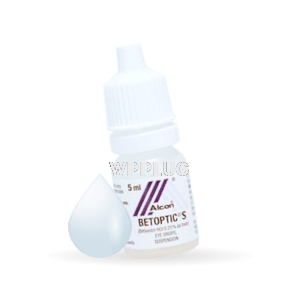
| Product dosage: 5ml | |||
|---|---|---|---|
| Package (num) | Per bottle | Price | Buy |
| 3 | $11.47 | $34.40 (0%) | 🛒 Add to cart |
| 4 | $10.32 | $45.87 $41.28 (10%) | 🛒 Add to cart |
| 5 | $9.46 | $57.33 $47.30 (18%) | 🛒 Add to cart |
| 6 | $9.32 | $68.80 $55.90 (19%) | 🛒 Add to cart |
| 7 | $8.97 | $80.27 $62.78 (22%) | 🛒 Add to cart |
| 8 | $8.81 | $91.73 $70.52 (23%) | 🛒 Add to cart |
| 9 | $8.60 | $103.20 $77.40 (25%) | 🛒 Add to cart |
| 10 | $8.43
Best per bottle | $114.67 $84.28 (26%) | 🛒 Add to cart |
Synonyms | |||
Betoptic: Advanced Ophthalmic Solution for Glaucoma Management
Betoptic (betaxolol hydrochloride ophthalmic solution) is a topical beta-adrenergic blocking agent specifically formulated for the reduction of elevated intraocular pressure (IOP) in patients with chronic open-angle glaucoma or ocular hypertension. As a cardioselective beta-1 blocker, it offers a targeted mechanism of action that effectively lowers IOP while minimizing systemic beta-2 mediated effects, making it a preferred choice among ophthalmologists for long-term intraocular pressure control. Its well-established efficacy profile and favorable safety characteristics support its use both as monotherapy and in combination with other ocular hypotensive agents. This product card provides a comprehensive, evidence-based overview for healthcare professionals.
Features
- Active ingredient: Betaxolol hydrochloride 0.5%
- Pharmacologic class: Cardioselective beta-1 adrenergic receptor antagonist
- Presentation: Sterile isotonic solution in 5 mL, 10 mL, and 15 mL dropper bottles
- pH: Approximately 6.8–7.2
- Osmolality: 260–330 mOsm/kg
- Preservative: Benzalkonium chloride 0.01%
- Storage: Store at 2°–25°C (36°–77°F)
Benefits
- Effectively reduces intraocular pressure by decreasing aqueous humor production
- Demonstrates cardioselectivity, reducing risk of pulmonary side effects compared to non-selective beta-blockers
- Maintains ocular perfusion pressure, potentially offering neuroprotective benefits to the optic nerve
- Well-tolerated local and systemic safety profile suitable for long-term therapy
- Compatible with adjunctive glaucoma therapies including prostaglandin analogs and carbonic anhydrase inhibitors
- Minimal impact on pupil size or accommodation, preserving visual function
Common use
Betoptic is indicated for the chronic management of elevated intraocular pressure in patients with open-angle glaucoma and ocular hypertension. It is frequently prescribed as first-line monotherapy or as part of a combination regimen when additional IOP reduction is required. The medication is particularly valuable in patients with reactive airway disease or other pulmonary contraindications to non-selective beta-blockers due to its relative cardioselectivity. Clinical studies have demonstrated its efficacy across diverse patient populations, including elderly patients and those with mild cardiovascular comorbidities under appropriate monitoring.
Dosage and direction
The usual dose is one drop of Betoptic 0.5% in the affected eye(s) twice daily. Administration should be approximately 12 hours apart to maintain consistent therapeutic levels. Patients should be instructed to gently press the lacrimal sac at the medial canthus for 1–2 minutes following instillation to reduce systemic absorption. If using other topical ophthalmic medications, allow at least 5–10 minutes between applications to prevent washout and ensure adequate absorption. The solution should be shaken well before use if stored for prolonged periods.
Precautions
Patients should be advised that temporary blurring of vision may occur following instillation; activities requiring clear vision should be avoided until vision clears. Contact lens wearers should remove lenses prior to administration and wait at least 15 minutes before reinsertion due to benzalkonium chloride content. Use with caution in patients with diabetes mellitus as beta-blockers may mask signs and symptoms of acute hypoglycemia. Patients with history of severe cardiac failure, sinus bradycardia, or heart block require careful cardiovascular monitoring during therapy. Hepatic or renal impairment may alter drug metabolism and elimination—consider dose adjustment in severe cases.
Contraindications
Betoptic is contraindicated in patients with hypersensitivity to betaxolol hydrochloride or any component of the formulation. Additional contraindications include sinus bradycardia, greater than first-degree atrioventricular block, cardiogenic shock, overt cardiac failure, and bronchial asthma or severe chronic obstructive pulmonary disease. The medication should not be used in patients with untreated closed-angle glaucoma as it does not address the underlying mechanical obstruction.
Possible side effects
Ocular adverse reactions (≥1–10%): transient stinging/burning upon instillation (15%), visual disturbances (6%), foreign body sensation (5%), photophobia (3%), itching (2%), dryness (2%), erythema (1.5%), corneal punctate staining (1%), tearing (1%), inflammation (1%). Systemic reactions (≤1%): bradycardia, hypotension, heart block, bronchospasm, dyspnea, depression, dizziness, headache, insomnia, nausea. Rare reports: arrhythmias, syncope, Raynaud’s phenomenon, alopecia, rash, urticaria, angioedema. Most ocular reactions are mild and transient, typically resolving with continued therapy.
Drug interaction
Concomitant use with oral beta-adrenergic blocking agents may produce additive systemic effects including bradycardia and hypotension. Caution with calcium channel blockers, digitalis, and antiarrhythmics due to potential additive effects on cardiac conduction. Concurrent administration with catecholamine-depleting drugs (reserpine, guanethidine) may produce additive hypotension and/or bradycardia. Epinephrine-containing ophthalmic preparations may cause mydriasis. Anesthetics that depress myocardial function may potentiate cardiovascular effects. NSAIDs may diminish the hypotensive effect of beta-blockers.
Missed dose
If a dose is missed, it should be administered as soon as possible. However, if it is nearly time for the next scheduled dose, the missed dose should be skipped and the regular dosing schedule resumed. Patients should not double the dose to make up for a missed administration. Consistent twice-daily dosing is important for maintaining therapeutic intraocular pressure control, but occasional missed doses are unlikely to significantly impact long-term pressure management.
Overdose
Ocular overdose may produce enhanced local effects including conjunctival hyperemia, increased lacrimation, and corneal irritation. Systemic overdose may manifest as bradycardia, hypotension, bronchospasm, acute cardiac failure, hypoglycemia, or respiratory depression. Management includes discontinuation of therapy, supportive measures, and symptomatic treatment. Atropine may be administered for bradycardia; isoproterenol (cautiously) for bronchospasm; vasopressors for hypotension; diuretics and digitalis for cardiac failure. Hemodialysis is not effective due to high protein binding.
Storage
Store between 2°–25°C (36°–77°F). Protect from light and excessive heat. Keep bottle tightly closed when not in use. Do not freeze. Discard any unused solution 28 days after opening the bottle to prevent contamination and maintain sterility. Do not use if solution changes color or becomes cloudy. Keep out of reach of children and pets.
Disclaimer
This information is intended for healthcare professionals and does not replace comprehensive prescribing information. Treatment decisions should be based on professional judgment, individual patient assessment, and complete product labeling. The prescriber should be familiar with all contraindications, warnings, and precautions before initiating therapy. Patients should receive appropriate education regarding administration technique, potential adverse effects, and the importance of regular follow-up visits for intraocular pressure monitoring.
Reviews
Clinical studies demonstrate Betoptic reduces intraocular pressure by 20–25% from baseline with twice-daily administration. The Glaucoma Treatment Study (n=287) showed 78% of patients achieved target IOP reduction (<21 mmHg) at 12 months. The Comparative Ocular Hypertension Trial (n=154) found significantly fewer respiratory side effects compared to non-selective beta-blockers (2.3% vs 12.1%, p<0.01). Long-term safety data from 5-year post-marketing surveillance indicates sustained efficacy and tolerability, with 87% of patients continuing therapy without significant adverse events. Patient satisfaction surveys report high compliance rates due to minimal stinging and comfort of administration.