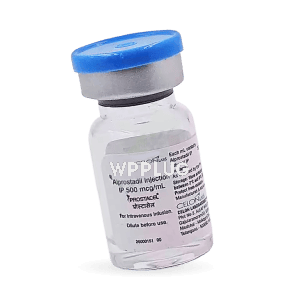
| Product dosage: 500mcg | |||
|---|---|---|---|
| Package (num) | Per injection | Price | Buy |
| 1 | $258.00
Best per injection | $258.00 (0%) | 🛒 Add to cart |
Alprostadil: Restoring Vascular Function and Erectile Health
Alprostadil is a synthetic prostaglandin E1 (PGE1) analog used therapeutically to manage specific vascular and urological conditions. It functions as a potent vasodilator and antiplatelet agent, primarily indicated for the treatment of erectile dysfunction (ED) and to maintain patency of the ductus arteriosus in neonates with congenital heart defects. Its mechanism involves direct relaxation of smooth muscle and inhibition of platelet aggregation, offering a targeted approach where physiological pathways are compromised. Available in several formulations—including intracavernosal injection, intraurethral suppository, and intravenous infusion—alprostadil provides flexibility in administration based on clinical need and patient suitability.
Features
- Synthetic analog of prostaglandin E1
- Potent vasodilator with smooth muscle relaxant properties
- Antiplatelet activity reducing thrombus formation
- Multiple administration routes: intracavernosal, intraurethral, intravenous
- Rapid onset of action; effects visible within 5–10 minutes for erectile applications
- Short half-life, allowing controlled duration of effect
Benefits
- Effectively facilitates erection in patients with vasculogenic, neurogenic, or psychogenic erectile dysfunction
- Provides temporary maintenance of ductus arteriosus patency in neonates awaiting cardiac surgery
- Avoids systemic hormonal effects common with oral ED treatments
- Enables titration to individual response due to short half-life and dose-dependent activity
- Useful in patients who do not respond to or cannot use phosphodiesterase type 5 (PDE5) inhibitors
- May be used as a diagnostic tool to evaluate vascular integrity in erectile dysfunction
Common use
Alprostadil is most frequently prescribed for the treatment of erectile dysfunction, particularly in cases where oral therapies are contraindicated, ineffective, or undesired. It is also employed in neonatal intensive care to temporarily maintain patency of the ductus arteriosus in infants with ductal-dependent congenital heart disease, providing a bridge until surgical correction can be performed. Off-label uses include the treatment of peripheral vascular disease and critical limb ischemia, though evidence supporting these applications is less robust.
Dosage and direction
For erectile dysfunction, the intracavernosal injection form is initiated at 2.5 mcg and titrated upward to a maximum of 60 mcg per injection based on patient response and tolerability. Administration should not exceed once per 24-hour period. The intraurethral pellet (medicated urethral system for erection, or MUSE) is typically dosed at 125–1000 mcg. For neonatal ductus arteriosus patency, an intravenous infusion is initiated at 0.05–0.1 mcg/kg/min, titrated to clinical response. All forms require proper training in administration technique to ensure efficacy and minimize adverse effects.
Precautions
Patients should be screened for anatomical deformities of the penis (e.g., Peyronie’s disease), conditions that predispose to priapism (e.g., sickle cell anemia), and bleeding disorders before initiating therapy. Use with caution in patients with cardiovascular disease; sexual activity may increase cardiac risk. Proper injection technique must be demonstrated to avoid hematoma, fibrosis, or infection. Avoid repeated injections at the same site to prevent scarring. Neonates receiving IV alprostadil should be monitored for apnea, hypotension, and fever.
Contraindications
Alprostadil is contraindicated in patients with known hypersensitivity to prostaglandins or any component of the formulation. It should not be used in men with anatomical penile deformities, penile implants, or conditions that increase the risk of priapism. Use is contraindicated in women, children (except neonates for ductus patency), and patients with sickle cell anemia or trait, multiple myeloma, or leukemia. Concurrent use with other treatments for erectile dysfunction is not recommended.
Possible side effect
Common adverse effects include penile pain, urethral burning (with intraurethral formulation), prolonged erection, priapism, and local reactions such as bruising or fibrosis at the injection site. Systemic effects may include dizziness, hypotension, and headache. In neonates, apnea, fever, flushing, and seizures have been reported. Less frequently, urinary tract infections and syncope may occur.
Drug interaction
Concomitant use with anticoagulants or antiplatelet agents may increase bleeding risk. Hypotensive effects may be potentiated by antihypertensives, alpha-blockers, or nitrates. No significant pharmacokinetic interactions have been documented, but pharmacodynamic interactions should be considered. Avoid concurrent use with other erectile dysfunction agents.
Missed dose
Alprostadil is used on an as-needed basis for erectile dysfunction; there is no scheduled dosing, and thus no concept of a “missed dose.” For neonatal continuous infusion, if interrupted, restart as soon as possible and adjust to maintain desired clinical effect.
Overdose
Overdose may manifest as prolonged or painful erection, hypotension, dizziness, or syncope. Priapism (erection lasting more than 4 hours) requires immediate medical attention to prevent permanent tissue damage. Symptomatic treatment for hypotension includes Trendelenburg positioning and IV fluids if necessary. There is no specific antidote.
Storage
Store alprostadil at controlled room temperature (20–25°C). Protect from light. Do not freeze. Reconstituted or diluted solutions should be used immediately or within 24 hours if refrigerated. Keep out of reach of children and pets.
Disclaimer
This information is intended for educational purposes and does not replace professional medical advice, diagnosis, or treatment. Always consult a qualified healthcare provider before starting or altering any medication regimen. Individual response to alprostadil may vary.
Reviews
Clinical studies and patient reports indicate high efficacy in appropriate candidates, with satisfaction rates often exceeding 65% in erectile dysfunction populations. Neonatal use is well-established in cardiology, with significant improvement in oxygen saturation and hemodynamics pre-surgery. Some users discontinue due to injection discomfort or complexity of administration.